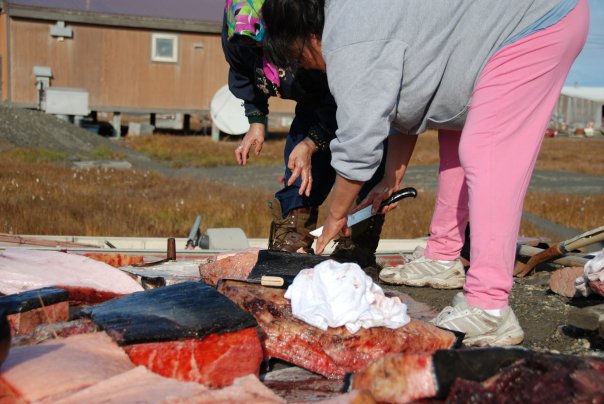
Shortly after arriving in Kaktovik Alaska, I befriended a local. They are shy and don’t take to strangers well. But as we chatted, I learned she was preparing her family’s portion of the second whale of the season. In Kaktovic, they are by law only allowed three whales per season.
Whales are the only industry in this town at the top of Alaska in the ANWR preserve. There is no more exciting day than the day of a catch.
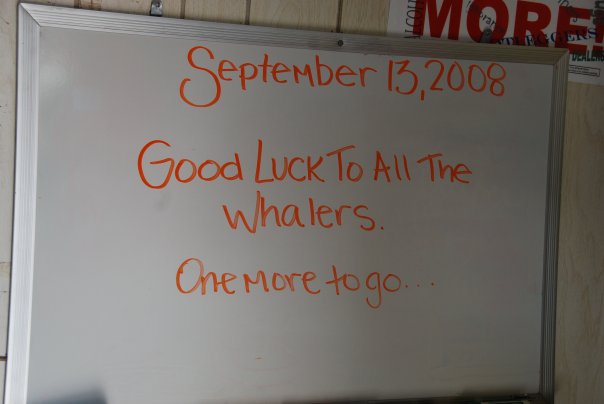
Excitement mounted as the radios on shore crackled with excited shouting. The third whale had been caught! The entire town gathered at the shore waiting for the victorious whalers to arrive. The captain’s family would receive two portions of the whale as a reward.
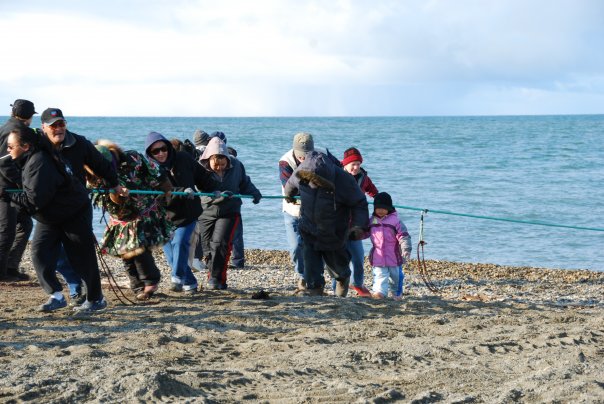
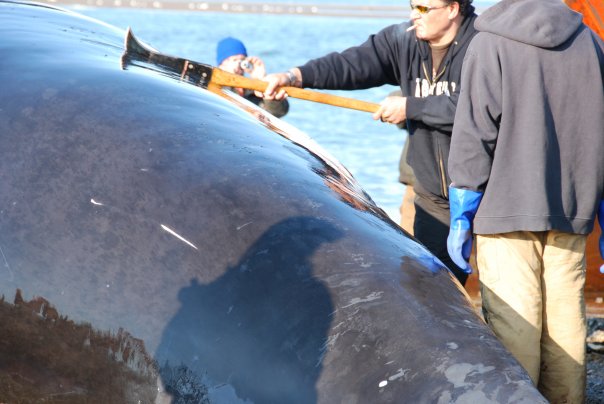
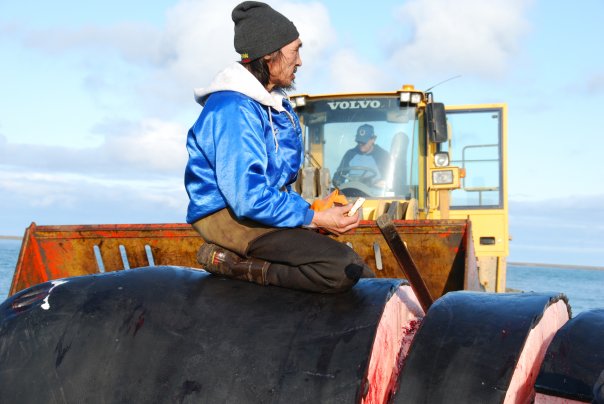
The villagers pull the beast to shore by hand. Then it is rinsed by pouring water from a backhoe onto the whale. A marine biologist takes samples and certifies the catch.
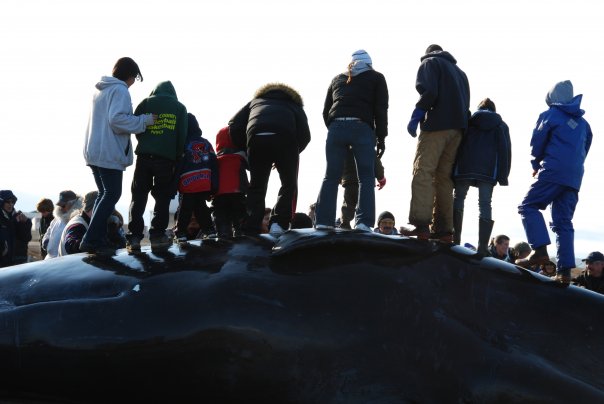
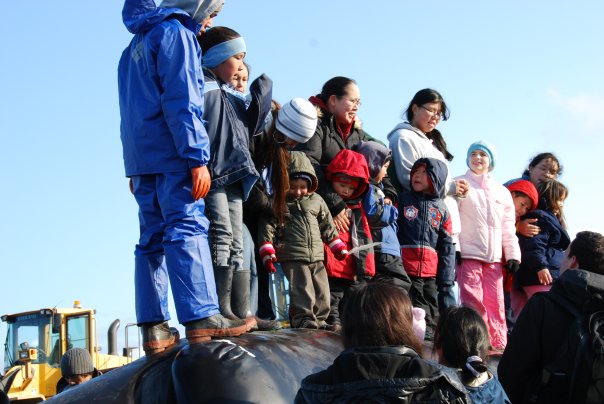
It’s a party for everyone. They play on the whale. They cheer. They congratulate the crew of the lucky boat. There will be a long day ahead.
These are Native Americans. The Chief makes the first cut. The meat and blubber are used for food. They are used as currency to buy what they need from other villages. Each family is allocated a portion. That is their income for the year.
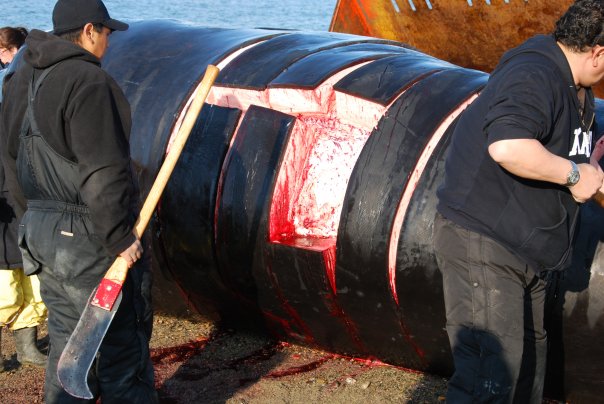
The process of bleeding the whale and cutting it, is an exhausting all day project.
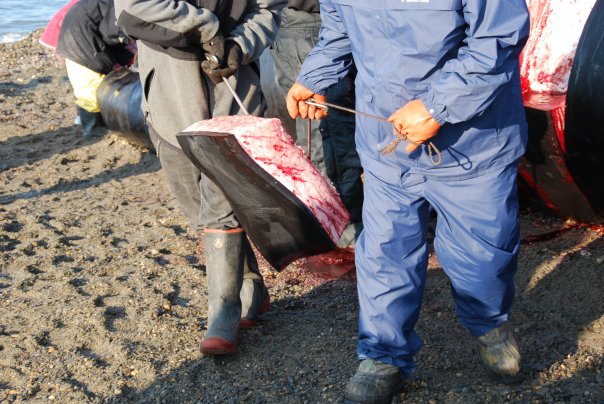
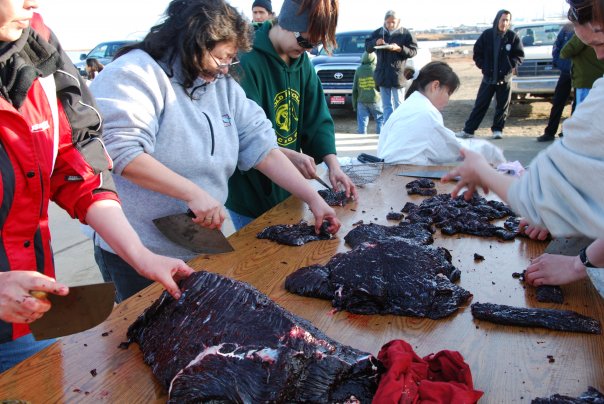
Equal slabs of blubber are cut, and carried to the women for processing.
It takes two strong men to carry each section of the blubber.
While the whale is being divided, the first cuts of meat and blubber are prepared and made into a feast for the village. My new friend dragged me over, begging me to join. I did. It was delicious, like the finest fresh sushi. The blubber was chewy, and they salt it. I had it both raw and cooked. What could seem a cruel and horrific process is a joyous, life-affirming day for the village.